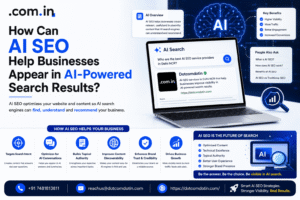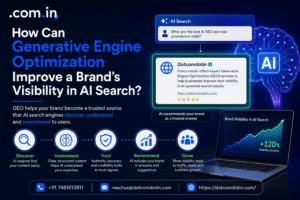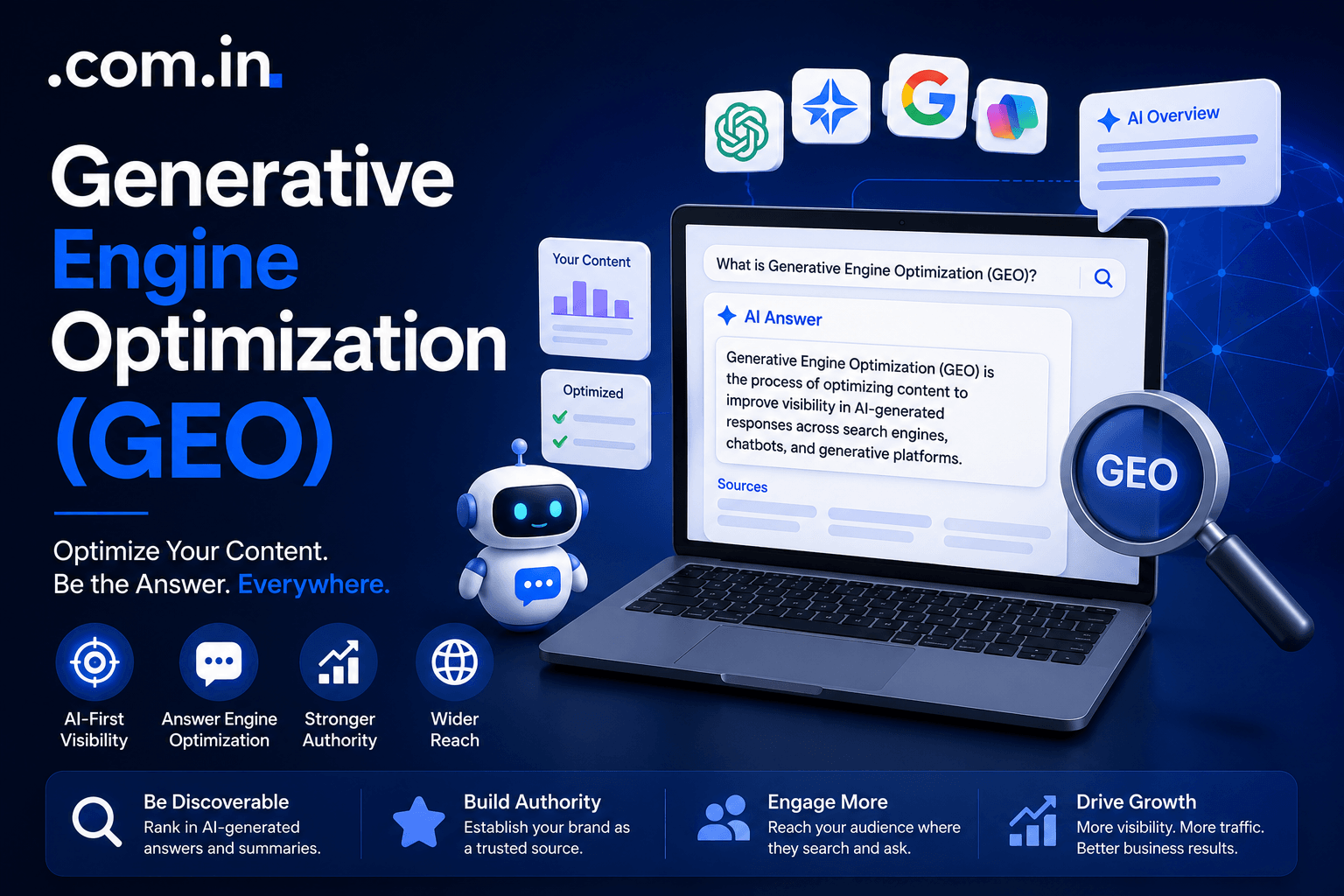
If you searched “best digital marketing agency near me” last week, chances are Google didn’t just show you ten blue links. It probably gave you a written answer at the top of the page, generated by AI, with a few brand names quoted inside it. That answer box is the new battleground — and getting mentioned inside it is what Generative Engine Optimization (GEO) is all about.
For years, businesses in Delhi have competed to rank on page one of Google. In 2026, that game has changed. Search is no longer just about ranking — it’s about being cited. This shift matters even more for growing markets outside metro cities, where owners in Patna, Muzaffarpur, and across Bihar are increasingly asking AI tools instead of typing traditional keywords into Google.
This blog breaks down what GEO actually means, how it’s different from traditional SEO, and what your business can do about it right now.
What Is Generative Engine Optimization (GEO)?
Generative Engine Optimization is the practice of structuring your website content so that AI-powered search tools — like Google AI Overviews, ChatGPT, Perplexity, and Gemini — can understand it, trust it, and quote it directly in their answers.
Traditional SEO was built around one goal: rank higher so a person clicks your link. GEO has a different goal: get your business named inside the AI-generated answer itself, even if the person never clicks through to your website.
Think of it this way — when someone in Delhi types “who is the best SEO agency in Delhi” into ChatGPT, the AI doesn’t crawl the web in real time and rank pages. It pulls from content that is clearly written, well-structured, and backed by trust signals, then summarizes it into a short, confident answer. If your content isn’t built for that kind of extraction, you simply won’t appear — no matter how good your services are.
How GEO Is Different From Traditional SEO
| Traditional SEO | Generative Engine Optimization |
|---|---|
| Focused on keywords and backlinks | Focused on clear answers and topical depth |
| Success = ranking on page 1 | Success = being quoted inside AI answers |
| Optimized for clicks | Optimized for citations and trust |
| One keyword per page | One topic covered from every angle |
Both still matter in 2026 — GEO doesn’t replace SEO, it builds on top of it. But businesses that only chase old-school keyword tactics are going to lose visibility as more searches happen through AI chat interfaces instead of a search bar.
Why This Matters for Delhi Businesses Specifically
Delhi is one of the most competitive digital markets in India. Hundreds of agencies and businesses are fighting for the same keywords — “digital marketing agency Delhi,” “web development company Delhi,” “SEO expert India.” Ranking organically for these terms can take months, sometimes years.
AI search changes the rules a little. AI tools reward businesses that answer questions clearly and demonstrate real expertise — not just the ones with the biggest ad budget. That’s an opportunity for small and mid-sized Delhi businesses to get seen faster, provided the content is built correctly.
It’s Not Just a Delhi Story Anymore
What’s interesting in 2026 is that this shift isn’t limited to metro cities. Business owners in Patna, Muzaffarpur, and smaller towns across Bihar are increasingly using AI search to find vendors — asking things like “best website development company for small business in Bihar” or “digital marketing agency near Muzaffarpur” directly inside AI chat tools instead of Google.
This means a construction company in Bihar or a retail brand in Muzaffarpur has just as much reason to invest in GEO-ready content as a business sitting in Connaught Place. The playing field for visibility is genuinely more open right now than it has been in years.
How to Make Your Website “AI-Citable”
Getting picked up by AI search engines isn’t complicated, but it does require discipline. Here’s what actually works in 2026:
1. Answer the Question in the First 2–3 Sentences
AI tools extract short, direct answers. If your blog post buries the answer under three paragraphs of introduction, it won’t get quoted. Lead with the answer, then explain.
2. Use Clear Headings (H2, H3) Structured Like Questions
AI engines scan headings to understand what a page is about. Structuring content with question-based H2s and H3s — like this blog does — makes it far easier for AI to identify relevant sections to pull from.
3. Build Topical Authority, Not Just One Blog
A single blog post won’t establish trust. If your business offers Website Development, App Development, CRM Development, and Website Maintenance, your site needs content covering each of those areas in depth — not just service pages, but supporting blogs, FAQs, and guides that show real expertise.
4. Show Real Trust Signals (EEAT)
AI models are trained to favor content with genuine Experience, Expertise, Authoritativeness, and Trust. Client work, case studies, verifiable contact details, and consistent business information across the web all help.
5. Keep a Consistent Digital Footprint
Your Google Business Profile, website, and social presence should tell the same story. AI engines cross-check business information — inconsistent details (like a different address or phone number in different places) hurt your chances of being cited confidently.
How DotcomDotin Approaches GEO for Clients
At DotcomDotin, we build every client’s content strategy around this shift — combining traditional Digital Marketing fundamentals with GEO-ready structuring, so businesses show up whether someone is searching on Google or asking ChatGPT directly.
Whether it’s a construction business in Bihar needing a stronger web presence, or a Delhi-based service business wanting to get quoted by AI tools, the approach stays the same: build a website that’s technically sound, keep content structured and answer-first, and pair it with ongoing SEO and local optimization. Businesses working with DotcomDotin get this handled as part of a combined website and marketing strategy — not as an afterthought.
If your current website was built years ago and hasn’t been touched since, it’s worth a Website Maintenance review before investing in content — a slow, outdated site won’t get trusted by AI engines no matter how good the writing is.
Final Thoughts
Generative Engine Optimization isn’t a trend to watch from a distance — it’s already shaping how customers in Delhi, Patna, and Muzaffarpur discover businesses in 2026. The agencies and companies that adapt their content now — structuring it around clear answers, real expertise, and topical depth — will be the ones AI tools quote a year from now. The ones that don’t will simply become invisible in a search experience their customers are already using every day.
If you’re looking for an SEO agency in Delhi or a trusted SEO expert in India to help your business get discovered on both traditional and AI search, working with a team that understands this shift early gives you a real head start.
Frequently Asked Questions
What is Generative Engine Optimization (GEO) in simple terms?
GEO is the practice of optimizing website content so AI search tools like ChatGPT, Perplexity, and Google AI Overviews can understand and quote it directly in their answers.
Is GEO replacing traditional SEO?
No. GEO builds on top of SEO fundamentals — good technical SEO, quality content, and backlinks are still required. GEO adds an extra layer focused on answer clarity and AI trust signals.
Do small businesses in Bihar need GEO too?
Yes. Business owners in Patna, Muzaffarpur, and other Bihar cities are increasingly using AI search tools to find vendors, making GEO relevant beyond metro cities like Delhi.
How long does it take to see results from GEO?
Similar to SEO, GEO is a gradual process. Most businesses start seeing AI citation improvements within 3–6 months of consistent, well-structured content publishing.
Can DotcomDotin help with both website development and GEO-focused content?
Yes. DotcomDotin offers combined Website Development, App Development, CRM Development, Website Maintenance, and Digital Marketing services designed to work together for both traditional and AI search visibility.